
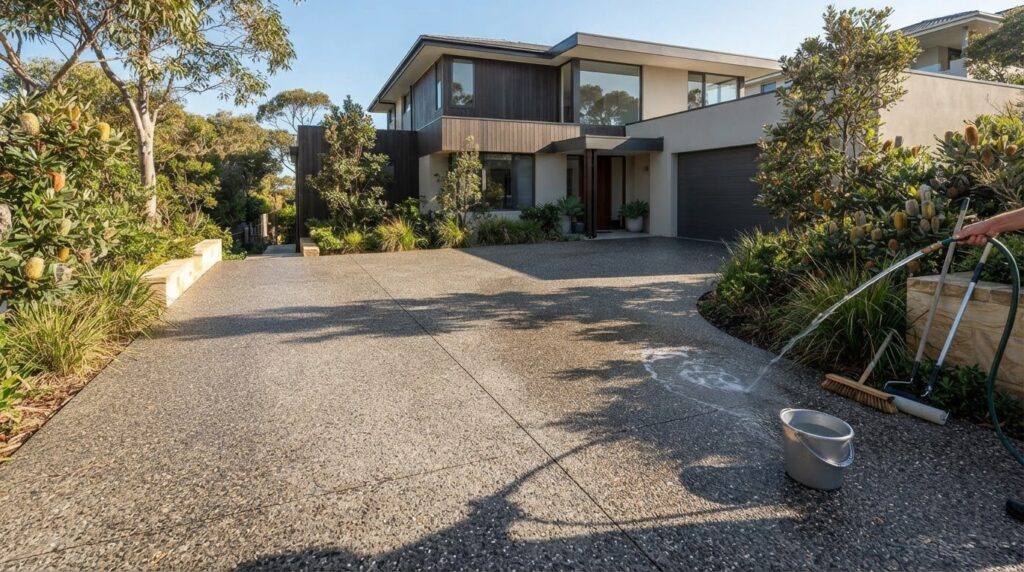
Good concrete care relies on a steady routine, not aggressive scrubbing. These concrete maintenance tips for homeowners start with cleaning spills promptly, using a pressure washer cautiously at a low setting, and washing a concrete driveway at least once a quarter. Before sealing, clean and dry the surface, then reapply sealer according to the manufacturer’s instructions.
It’s understandable to want a quick fix for oil marks, grime or a tired-looking finish, but harsh chemicals and excessive pressure can damage concrete. This guide covers common stains, driveways, patios, pool surrounds and indoor surfaces, as well as choosing and applying sealer carefully. It also explains which signs, such as larger cracks or severe surface flaking, may need more than routine care. A consistent approach helps protect the finish and keep the spaces around your home looking well maintained.
Key Takeaways
- Skip bleach, acidic cleaners and de-icing salts, which can damage concrete surfaces.
- Blot fresh spills promptly; for oil, absorb it before scrubbing with a suitable cleaner.
- Sweep regularly to help prevent scratches, and treat major cracks or severe spalling as more than a cosmetic issue.
- In coastal areas, rinse away salt buildup and choose a sealer designed for salty environments.
1. Avoiding harsh chemicals and cautious pressure washing
Start routine care with a stiff-bristle broom and a clear view of the surface. Sweep concrete regularly to remove grit, leaves and other loose debris before it gets ground underfoot. Small stones can abrade the surface as shoes, tyres or furniture move across it. On a driveway, sweeping before washing also prevents loose dirt from spreading across the slab.
Choose cleaners carefully. Bleach, acidic cleaners and de-icing salts can damage concrete, so avoid them on driveways, paths and patios. For ordinary dirt, start with water and a mild detergent. Apply the cleaner as directed on its label, scrub with a suitable brush, then rinse away residue. Don’t combine cleaning products or guess at stronger mixtures.
Use a pressure washer cautiously. Excessive pressure can etch concrete and leave rough marks that are difficult to disguise. Start with a low-pressure setting and test an inconspicuous patch before cleaning a larger area. Keep the spray moving rather than concentrating it in one spot, and avoid directing the jet at joints or damaged edges. Wash a concrete driveway at least once a quarter, adjusting the effort to the visible dirt.
When cleaning, sealing or repairing, read each product label and follow its safety precautions. Wear the protective equipment specified, keep people and pets away from the work area, and use tools only as directed. Take particular care with pressure washers, concrete cleaners and repair compounds.
Sun exposure and local conditions also affect concrete care. Light-coloured or tinted concrete can help reduce heat absorption in areas exposed to intense sun. If your Sydney property is in a bushfire-prone area, discuss concrete features with an expert, as intense heat can cause issues. Sweep first, choose a compatible cleaner and use controlled pressure to protect the surface.
2. Cleaning oil, organic and rust stains
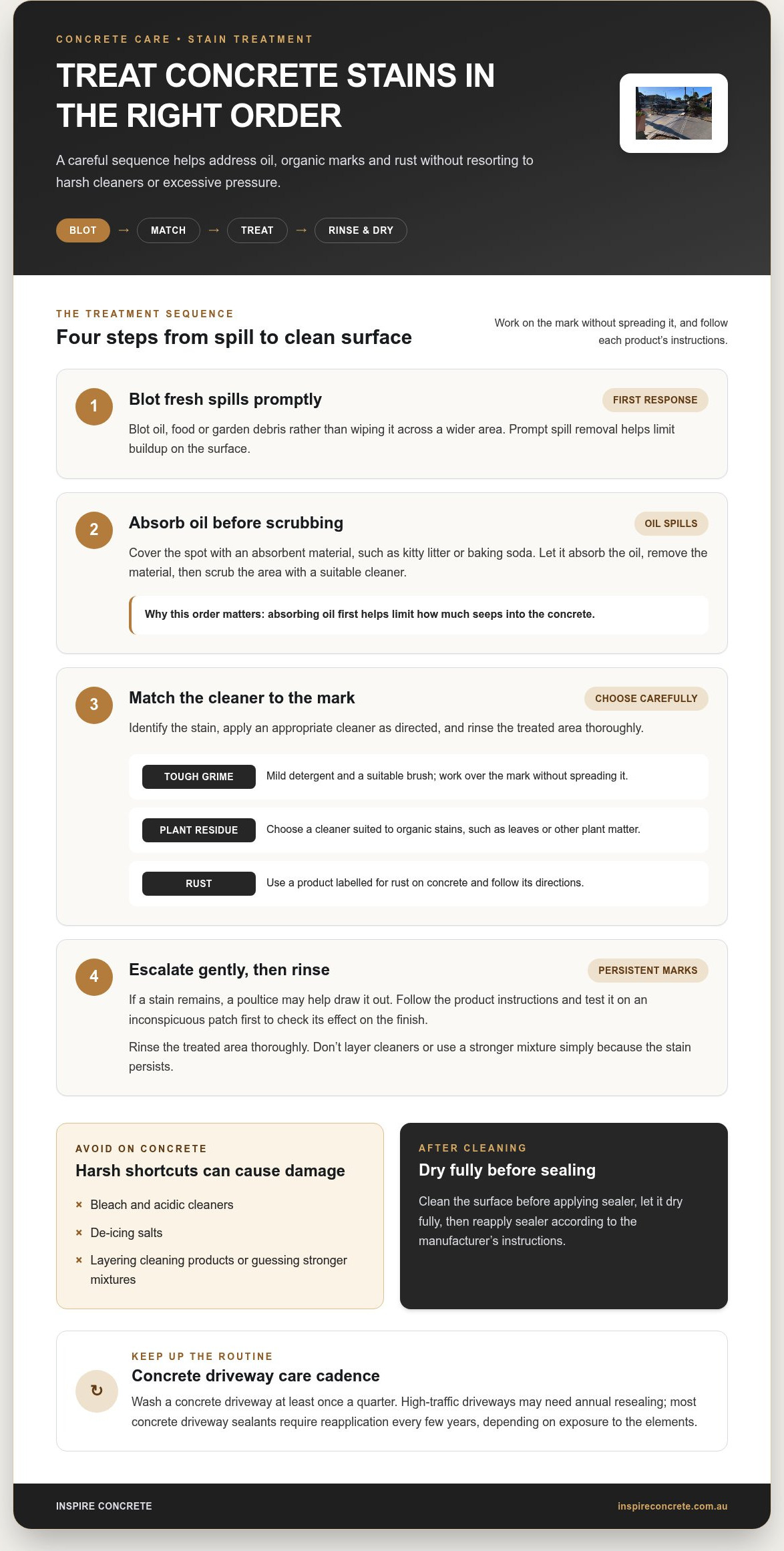
Act promptly when oil, food or garden debris stains concrete. Blot fresh spills rather than wiping them across a wider area. For an oil spill, cover it with an absorbent material such as kitty litter or baking soda. Let it absorb the oil, then remove it before scrubbing the spot. This helps limit how much oil seeps into the surface.
Next, match the cleaner to the stain. Use mild detergent and a brush for tougher grime, working over the mark without spreading it. For leaves or other plant residue, choose a cleaner suited to organic stains. For rust, use a product labelled for rust on concrete and follow its directions. Avoid bleach and acidic cleaners, which can damage concrete. Rinse the treated area thoroughly.
Stubborn marks may need a different approach. A poultice may help draw out a stain that remains after the initial clean. Follow the product instructions and test it on an inconspicuous patch first to check its effect on the finish. Don’t layer cleaners or use a stronger mixture simply because a stain persists. Identifying the stain correctly helps you choose the next cleaning step.
Regular sweeping and prompt spill removal reduce the chance of dirt and oil building up. Clean the surface before applying sealer, then let it dry fully. Reapply the sealer according to its manufacturer’s instructions. High-traffic concrete driveways may need annual resealing, while most concrete driveway sealants require reapplication every few years, depending on exposure to the elements. For marks that persist despite careful treatment, concrete cleaning and sealing can help refresh the surface and its protective finish.
3. Driveway, patio, pool surround and indoor concrete care
Regular driveway care can limit persistent oil and grease marks, which may seep into concrete. Sweep away grit and check for spills, cracks, surface flaking and areas where water collects. After heavy rain, observe where runoff travels. Concrete should slope away from the house to help manage rain and flooding. Spotting pooling water early is one of the most useful concrete maintenance tips for homeowners, as it can help protect nearby surfaces.
Australian building and council requirements for concrete repairs or drainage depend on the work and the property’s location. Don’t assume approval is always required or never required. Consider the repair scope and any drainage changes before work begins, and check the relevant local requirements for the project.
Assess cracks by their size and the condition of the surrounding surface. Small hairline cracks are often cosmetic, while larger cracks may need professional filling. Clean a small crack, then apply concrete filler or patching compound according to its instructions. Major cracks, severe spalling or uneven settling can point to problems beyond simple patching and may need structural repairs rather than surface touch-ups.
Patios and indoor concrete benefit from regular sweeping to remove grit that can scratch the finish. Add protective pads to patio furniture feet if chairs or tables move often. Near driveways, watch for invasive plant roots that can damage concrete. Plan landscaping and lighting so plants don’t crowd the slab and driveway edges remain visible after dark. These concrete maintenance tips for homeowners also help keep access areas tidy and easier to inspect.
Pool surrounds need particular attention to footing. Choose textured or slip-resistant finishes, and use poolside sealers designed to resist chlorine and salt exposure. Inspect outdoor surfaces after heavy rain and address standing water or new damage promptly. In colder conditions, clear snow and ice carefully. A shovel or blower with a plastic edge can help avoid scratching concrete. In every season, follow the surface product’s instructions.
4. Choosing and applying concrete sealant
Choose a sealer for the concrete’s location and exposure, not just its appearance. A driveway faces vehicle traffic, while a patio may be exposed to moving furniture and outdoor weather. Coastal surfaces need extra consideration because of salt. Rinse salt buildup from concrete and choose a sealer designed for salty environments. For pool surrounds, account for chlorine and salt exposure when selecting a poolside sealer.
Prepare the surface before opening the product. Remove dirt, oil and old residue, then let the concrete dry completely. Check the label for suitable surfaces, preparation steps, application conditions and coverage instructions. Sealer applied over grime can trap marks beneath the finish. Damp concrete can also interfere with application, so don’t rush this stage.
Apply the product as directed by its manufacturer. Plan your sequence, apply it evenly and avoid missed patches or excessive buildup. Follow the instructions for tools, coats and drying time between steps, as requirements vary by product. Keep people and pets off the treated area for the period stated on the label. Don’t use the surface until the instructions allow it.
Drainage matters as much as the coating. Water movement and moisture can contribute to efflorescence, the pale deposits that appear on concrete. Improve drainage and seal the surface to help prevent it. After application, keep a record of the product and its instructions, then use those directions to plan maintenance. Exposure to weather and traffic influences how often resealing is needed. Regularly inspect driveways for worn patches, and address them using product guidance. For help with choosing and applying concrete sealer, arrange professional support for the surface.
Inspire Concrete: Exposed Aggregate Driveways
Inspire Concrete builds Exposed Aggregate Driveways for homeowners planning a new driveway or updating an existing outdoor surface. If you’re weighing appearance, upkeep and how a driveway will complement your home, consider the finish options before deciding. Stencil Concrete Driveways, Stamped Concrete Driveways and Coloured Concrete Driveways offer other distinctive design directions.
Bring your preferred look and the practical needs of your property into the conversation. A driveway should suit how you use the space as well as the character of your home. Inspire Concrete can help you plan a concrete driveway that fits your project. Contact Inspire Concrete for a free, no-obligation quote from a qualified estimator.
Plan your concrete project with care
Use your next concrete project to match the finish to the way you use the space. A driveway’s purpose, the surrounding architecture and exposure to weather all shape the choices to consider before work begins. Bringing maintenance into the design conversation can help you plan a surface that suits your home from the outset.
These concrete maintenance tips for homeowners can also guide decisions before installation: consider the surface style you prefer and the care routine that fits your household. Inspire Concrete offers Exposed Aggregate Driveways, Stencil Concrete Driveways and Stamped Concrete Driveways, giving homeowners distinct finishes to consider for a new driveway.
Bring your project vision and questions together, then take the next step with Inspire Concrete. Contact Inspire Concrete to discuss the driveway finish that fits your plans. A considered choice can help your home’s outdoor design move in a direction you’ll enjoy.
Frequently Asked Questions
How often should homeowners clean and seal concrete in Australia?
Pressure-wash a concrete driveway at least once a quarter, and reseal high-traffic driveways annually. Most driveway sealers need reapplication every few years, depending on exposure to the elements. These are separate maintenance intervals: cleaning removes surface dirt, while resealing renews protection. Keep a simple record of cleaning and sealing dates so you can compare the surface condition with the manufacturer’s instructions.
What is the best way to clean concrete driveways, paths and patios?
Match the cleaning method to the surface and the type of dirt. For routine upkeep, remove loose debris first, then use water and mild detergent where needed. On a large driveway, clean in manageable sections so dirty runoff doesn’t spread over areas you’ve already washed. For decorative paths or patios, test your cleaning method on an inconspicuous patch to assess its effect on the finish.
Which concrete sealers are suitable for Australian weather and UV exposure?
Choose a sealer labelled for your concrete surface and its exposure rather than assuming one product suits every location. Check the manufacturer’s directions for outdoor use and relevant weather conditions, including sun exposure. Coastal properties need a sealer designed for salty environments; poolside products should suit chlorine and salt exposure. Follow the label’s preparation and application instructions, as requirements vary by product.
How can homeowners prevent and remove oil, rust, mould and efflorescence stains on concrete?
Absorb fresh oil before cleaning, and choose a cleaner suited to rust or organic growth rather than treating every stain alike. A poultice may help with stubborn marks. Efflorescence appears as pale deposits; improving drainage and sealing concrete can help prevent it. Avoid bleach and acidic cleaners, which can damage concrete, and rinse cleaning residue thoroughly.
How can homeowners protect concrete from water damage, freeze-thaw cycles and salt exposure?
Manage water at its source: concrete should slope away from the house, and drainage should prevent water lingering against the surface. In freeze-thaw conditions, clear snow and ice promptly to reduce moisture entering concrete before it freezes and expands. Near the coast, rinse salt buildup from the surface and use a sealer designed for salty environments. A plastic-edged snow tool helps avoid surface damage.
What maintenance is recommended for concrete around pools and outdoor areas?
For pool surrounds, choose a textured or slip-resistant finish and a poolside sealer suited to chlorine and salt exposure. Rinse away salt buildup and remove leaves or other debris before they sit on the surface. On patios, fit protective pads to furniture feet if pieces move often. After heavy rain, check outdoor concrete for pooling water or visible changes that need attention.
